


T-beam
A T-beam is a structural component defined by its T-shaped cross-section, comprising a horizontal top flange and a vertical lower web. This design is engineered to maximize load-bearing efficiency, making it a cornerstone of modern construction across residential, commercial, and infrastructure projects. The flange of the T-beam primarily resists bending forces—both tension and compression—while the web handles shear forces acting parallel to the beam’s length. This division of labor optimizes material usage: the flange distributes bending stresses over a wide area, and the web transfers loads vertically to foundations. As a result, T-beams offer an exceptional strength-to-weight ratio, minimizing waste and reducing the structure’s overall weight, which eases foundation demands and cuts construction costs. T-beams are constructed from reinforced concrete, steel, or composite materials. In reinforced concrete systems, the flange often integrates with the floor slab, forming a monolithic structure that enhances rigidity and load transfer. This is common in multi-story buildings, where the slab acts as the top flange, and the vertical web supports the slab’s weight and applied loads. Steel T-beams are used in steel-framed structures like industrial warehouses or bridges, leveraging steel’s high tensile strength. Composite T-beams combine steel and concrete, capitalizing on steel’s tension resistance and concrete’s compression strength for greater efficiency. Widely applied in bridge construction, precast concrete T-beams are manufactured off-site in controlled conditions, ensuring consistent quality and reducing on-site time. These beams are transported to sites and installed via cranes, ideal for large-span bridges where speed and precision matter. In buildings, T-beams support floor slabs, enabling open, column-free spaces in offices or retail centers. They also feature in roof systems, spanning long distances without intermediate supports to create unobstructed roof areas. Designing a T-beam requires careful load calculation—dead loads (structure weight) and live loads (people, traffic). Engineers determine flange width (limited by adjacent beam spacing to avoid overlap) and web depth to resist bending moments. For reinforced concrete T-beams, steel reinforcement placement is critical to withstand tension and compression. Steel T-beams need precise flange and web thickness sizing to meet strength requirements. In summary, the T-beam’s efficient design, versatility, and cost-effectiveness make it indispensable in modern construction. Its balance of strength and material usage solidifies its role in projects from small homes to large infrastructure, proving its value in creating safe, durable, and functional structures. (Word count: ~490)
Products
Category:
-
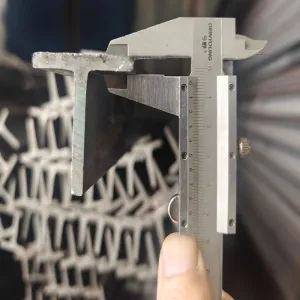
Cold drawn T-shaped steel
Category: T-section steelBrowse number: 451Number:Release time: 2026-03-24 23:19:26Cold drawn T-shaped beams offer superior dimensional accuracy and surface finish. This process enhances mechanical properties, resulting in higher strength and tighter tolerances compared to hot-rolled sections.
Grade:Q355B S355JR Q345 Q235B A36 S235JR Q355 Q235 ST37 16Mn
Length:6m/12m/as reuqest
Section:20*20mm-1000*1000*mm/as request
News
Category:
-
[industry news]Comprehensive Explanation of T-beam Specification Parameters...
2026-03-24 21:57:13 -
[industry news]T-beams: The Foundation of Structures with Wide Applications
2026-03-24 22:05:24
Case
Category:
No search results found!
Video
Category:
No search results found!
Download
Category:
No search results found!
Job
Category:
No search results found!
Featured Products
No search results found!



 Phone
Phone