


Cold drawn T-shaped beam
Cold-Drawn T-Shaped Beam: A Precision Structural Component The cold-drawn T-shaped beam is a high-performance structural element produced through a room-temperature metal-forming process that enhances mechanical properties and dimensional accuracy. Unlike hot-rolled alternatives, this component leverages work hardening to deliver superior strength and consistency, making it a staple in modern construction and engineering. The manufacturing process starts with raw metal stock—often mild steel, stainless steel, or alloy steel—cleaned to remove contaminants. The stock is then pulled through a sequence of progressively shaped dies, each refining the cross-section into the iconic T-profile: a vertical “web” and a horizontal “flange.” Cold drawing applies tension without heat, aligning the material’s crystalline structure and increasing hardness. This results in tight tolerances (often within ±0.1mm) and a smooth surface finish, eliminating the need for post-production machining in most cases. Structurally, the T-shape is optimized for load-bearing efficiency. The flange distributes tension and compression forces across its width, while the web resists shear stress, making the beam ideal for supporting horizontal spans (e.g., floor joists) or vertical loads (e.g., truss supports). Its geometry minimizes material waste, balancing strength and weight to reduce overall structural costs. Key advantages include: - Enhanced Strength: Work hardening boosts tensile strength by 20–30% compared to hot-rolled beams, improving fatigue resistance for cyclic load applications. - Precision: Tight dimensional control ensures seamless assembly in prefabricated structures, reducing on-site adjustments. - Surface Quality: A uniform, smooth surface simplifies corrosion protection (e.g., galvanization or powder coating), extending service life in outdoor or harsh environments. - Consistency: Controlled manufacturing processes guarantee uniform properties across batches, reducing performance variability. Applications span industries: In construction, cold-drawn T-beams are used in floor systems, roof trusses, and partition frames. In mechanical engineering, they form machinery frames, vehicle chassis components, and conveyor supports—where precision alignment is critical. For example, in automated warehouses, these beams provide stable, precise tracks for robotic systems. While work hardening reduces ductility (making them less suitable for high-impact applications), their strength-to-weight ratio and precision make them indispensable for most structural needs. In summary, the cold-drawn T-shaped beam is a testament to efficient engineering, combining reliability, strength, and precision to meet the demands of modern infrastructure and manufacturing. Its unique properties make it a preferred choice for engineers seeking cost-effective, high-performance structural solutions. (Word count: ~480)
Products
Category:
-
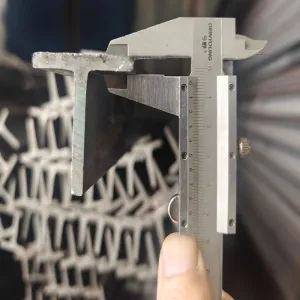
Cold drawn T-shaped steel
Category: T-section steelBrowse number: 451Number:Release time: 2026-03-24 23:19:26Cold drawn T-shaped beams offer superior dimensional accuracy and surface finish. This process enhances mechanical properties, resulting in higher strength and tighter tolerances compared to hot-rolled sections.
Grade:Q355B S355JR Q345 Q235B A36 S235JR Q355 Q235 ST37 16Mn
Length:6m/12m/as reuqest
Section:20*20mm-1000*1000*mm/as request
News
Category:
No search results found!
Case
Category:
No search results found!
Video
Category:
No search results found!
Download
Category:
No search results found!
Job
Category:
No search results found!
Featured Products
No search results found!



 Phone
Phone