


Welding T-beams
Welding T-beams is a cornerstone process in structural fabrication, producing robust, load-bearing components essential for construction, infrastructure, and industrial applications. T-beams—consisting of a vertical web and horizontal flange—offer an exceptional strength-to-weight ratio, making them ideal for supporting heavy loads in bridges, building frames, crane systems, and industrial machinery. Before welding commences, meticulous preparation is critical. Base materials, typically structural steels like ASTM A36 or high-strength low-alloy (HSLA) grades, must be thoroughly cleaned to remove rust, oil, grease, or mill scale. This is achieved via grinding, sandblasting, or chemical degreasing, as contaminants can compromise weld integrity, leading to porosity or weak joints. Next, the web and flange are secured using clamps or precision jigs to maintain a precise 90-degree angle and alignment, ensuring the final beam adheres to design specifications. Tack welds are applied at intervals to hold components in place during the main welding process. The choice of welding method depends on the beam’s thickness, production volume, and structural needs. Common techniques include Shielded Metal Arc Welding (SMAW) for small-scale projects, Gas Metal Arc Welding (GMAW, or MIG) for high-efficiency production, and Submerged Arc Welding (SAW) for heavy-duty, thick-section beams. For example, GMAW uses a continuous wire electrode and a shielding gas (argon-carbon dioxide mix) to protect the weld pool from atmospheric contamination. Welders follow a controlled sequence—alternating between the web’s two sides—to distribute heat evenly, minimizing warping and distortion. Multiple passes may be required for thicker sections, with each pass cleaned using a wire brush to remove slag before the next layer is applied. Quality control is paramount to ensure structural safety. Post-welding inspections start with visual checks for surface defects like cracks, undercut, or porosity. For critical applications, non-destructive testing (NDT) methods such as ultrasonic testing (UT) or magnetic particle testing (MPT) detect internal flaws invisible to the naked eye. Dimensional checks verify the beam’s angle, length, and thickness, ensuring compliance with engineering drawings. Properly welded T-beams form the backbone of modern structures, providing the strength and stability to withstand dynamic and static loads. From skyscraper frames to bridge girders, the precision of the welding process directly impacts the durability and safety of the final structure, underscoring the value of skilled welders and rigorous quality standards. This process not only shapes individual components but also contributes to the resilience of the built environment.
Products
Category:
-
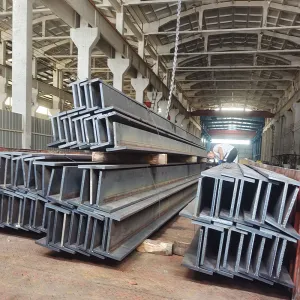
Welding T-beams
Category: T-section steelBrowse number: 449Number:Release time: 2026-03-24 23:03:46Welding T-beams is mainly used in agricultural machinery, hardware, electrical equipment, curtain wall decoration, embedded parts, building fences, room supports.
Grade:Q355B S355JR Q345 Q235B A36 S235JR Q355 Q235 ST37 16Mn
Length:6m/12m/as reuqest
Section:20*20mm-1000*1000*mm/as request
News
Category:
No search results found!
Case
Category:
No search results found!
Video
Category:
No search results found!
Download
Category:
No search results found!
Job
Category:
No search results found!
Featured Products
No search results found!



 Phone
Phone