


welded T-shaped steel
Welded T-shaped steel is a versatile structural component formed by joining two steel segments—a vertical web and a horizontal flange—at a 90-degree angle via welding, creating a T-like cross-section. This profile is engineered to deliver exceptional load-bearing performance, making it a cornerstone in industries where strength, flexibility, and customization are critical. The manufacturing process begins with material selection: mild steel or high-strength low-alloy (HSLA) steel is chosen based on the application’s load, corrosion resistance, and temperature requirements. The web and flange are cut to precise dimensions using plasma cutting or shearing. They are then aligned and clamped in position before welding—common techniques include submerged arc welding (SAW) for heavy-duty sections (due to its deep penetration and high deposition rate) or metal inert gas (MIG) welding for smaller, more intricate pieces. Post-welding, stress relief heat treatment may be applied to minimize residual stresses and prevent distortion, ensuring dimensional stability for large or thick components. Key characteristics of welded T-shaped steel include an outstanding strength-to-weight ratio, enabling it to support heavy loads without excessive bulk. The T-profile excels in resisting bending forces, making it ideal for beam and truss applications where vertical or horizontal load distribution is essential. Unlike hot-rolled T-sections (which have fixed dimensions), welded versions can be customized to specific flange widths, web heights, and thicknesses, reducing material waste and optimizing structural efficiency for unique project needs. In construction, welded T-shaped steel is used in building frames, floor joists, and roof trusses, where it distributes loads evenly across structures. Industrial applications include machinery frames, conveyor supports, and storage racks, where its rigidity and durability are valued. It also plays a role in bridge construction—auxiliary structures like guardrails or support brackets often use this profile. Specialized uses extend to automotive chassis and shipbuilding, where custom dimensions are needed to fit tight spaces while maintaining structural integrity. Quality control is paramount. Non-destructive testing (NDT) methods such as ultrasonic testing (UT) and magnetic particle inspection (MPI) detect weld defects (cracks, porosity, incomplete fusion) to ensure compliance with industry standards (e.g., ASTM, EN). This ensures the component performs reliably under operational loads, from heavy industrial machinery to high-rise buildings. Overall, welded T-shaped steel combines strength, adaptability, and cost-effectiveness. Its recyclability (steel is 100% recyclable without quality loss) further enhances its sustainability, making it an indispensable material in modern engineering and construction. Whether for standard or custom applications, it remains a go-to solution for engineers seeking optimal structural performance.
Products
Category:
-
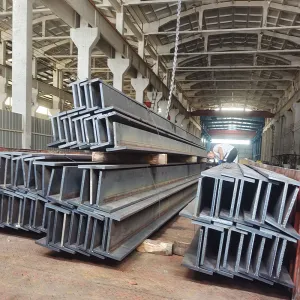
Welding T-beams
Category: T-section steelBrowse number: 449Number:Release time: 2026-03-24 23:03:46Welding T-beams is mainly used in agricultural machinery, hardware, electrical equipment, curtain wall decoration, embedded parts, building fences, room supports.
Grade:Q355B S355JR Q345 Q235B A36 S235JR Q355 Q235 ST37 16Mn
Length:6m/12m/as reuqest
Section:20*20mm-1000*1000*mm/as request
News
Category:
No search results found!
Case
Category:
No search results found!
Video
Category:
No search results found!
Download
Category:
No search results found!
Job
Category:
No search results found!
Featured Products
No search results found!



 Phone
Phone